

Review by Socialist Aotearoa Member Melissa
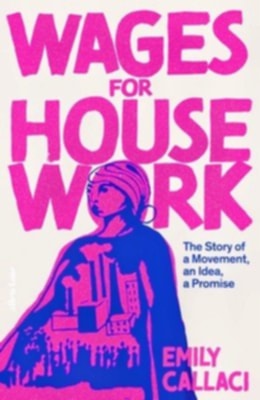
Emily Callaci has written a deeply researched account of a radical feminist campaign that challenged the foundations of capitalism by demanding economic recognition for domestic labour.
The book highlights the activism of five women who were leaders of the movement. Selma James was a working-class organizer who launched the Wages for Housework movement in London in 1972. Selma viewed Wages for Housework as a political project that would connect many different struggles into a unified campaign. According to Emily Callaci “For Selma James, in the 1950s as in the 1970s, revolution was a holistic way of life.” She saw the feminist movement as a radical expansion of the struggle of working class people against capitalism rather than being separate from the working class. The Wages for Housework campaign group met at her apartment for the first couple of years from 1973 then went on to open a women’s centre in a squat in Camden Town in 1975, which was a cramped space for the growing number of attendees. This space was vital to the movement since many women and unpaid workers had no centralised location to meet and share their grievances.
When threatened with eviction this is how a petition to Camden Town Council described their work. “ The Women’s Centre aims to change women’s views of themselves and their possibilities. Firstly, as a Wages for Housework Women’s Centre, it stands for recognition of the often invisible work women do at home, and has come to stand for that in the eyes not only of the local women but of the whole community. The discussions at the centre often give women a new estimation of their own worth and the confidence to confront their problems themselves. The Wages for Housework literature, teatowels, pot holders, balloons, etc on sale at the centre provide on the one hand a source of revenue for the centre and on the other give women something to take home with them that supports this view of a woman’s worth”.
They were advocates for women raising children, single mothers, immigrants, lesbian mothers wanting to keep custody of their children, sex workers, women facing racism and squatters facing eviction.
Selma James was a self-taught Marxist inspired by the writings of Marx and Engels, who argued that capitalism is dependent upon women’s unwaged labour—cooking, cleaning, child-rearing—to sustain the workforce, yet this labour is invisible and uncompensated. The Wages for Housework campaign understood that rather than just seeking money, the demand for wages was a way to expose how care work is rendered invisible and thus becomes easily exploited. They challenged themselves to imagine alternative futures where care is valued over production.
Callaci traces the campaign from its roots in 1970s New York and London to Italy, Barbados, Zambia, and beyond. She profiles five visionary women:
Along with Selma James there was Mariarosa Dalla Costa, an Italian scholar-activist who mobilized factory workers and artists into the movement. Silvia Federico was a philosopher who linked unpaid labour to austerity and fiscal crises. Wilmette Brown, a black lesbian poet and activist who reframed care work through anti-capitalist and anti-war lenses was another key figure as was Margaret Prescod, a radical organizer who connected the campaign to colonial reparations and sex worker rights.
Callaci, a historian and mother, weaves in her own experience of motherhood and academic life, showing how care work reshaped her understanding of labour and capitalism.
This book resonates in a post-COVID world where the boundaries between paid and unpaid work have blurred. It asks key questions such as what if society prioritized care over production? How would women’s lives change if they had more time? What does justice look like for those whose labour has always been taken for granted?
This book offers a powerful perspective on how feminist and anti-capitalist movements intersect. Callaci doesn’t gloss over the difficulties face by those in the movement or the clashes of personalities so it is a fascinating insight into the struggle to unite diverse movements and not be derailed by conflict. Callaci advocates starting from where we are to build a solid foundation for the world we envision, free from exploitation and oppression.
 Socialist Aotearoa
Leave a comment