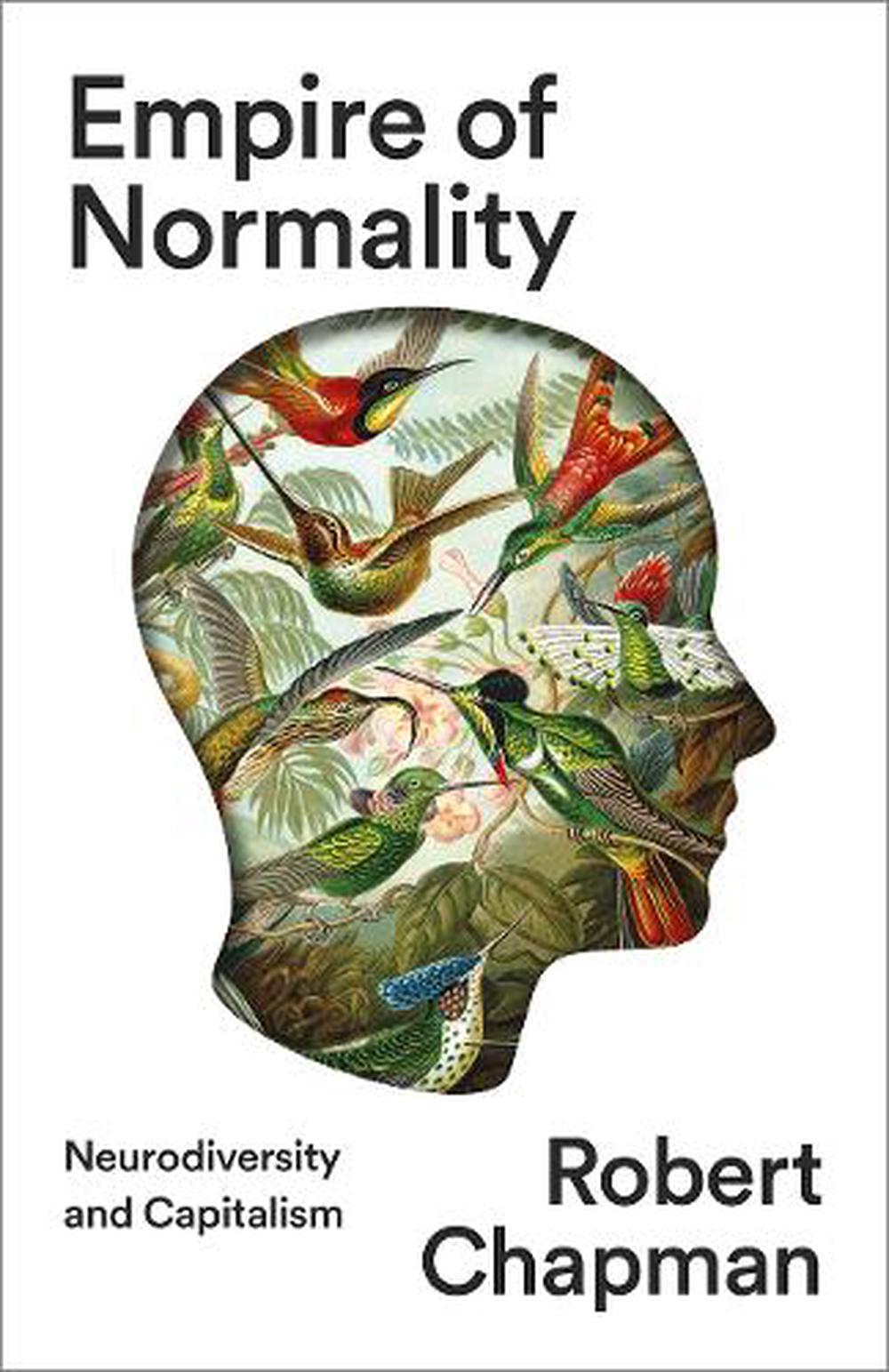


In our first article of 2024, Melissa Peterson reviews Robert Chapman’s new book on neurodivergent liberation that places the overturning of ableist norms at the heart of the struggle against capitalism.
Robert Chapman, Empire of Normality: Neurodiversity and Capitalism, London: Pluto Press
This thought-provoking book proposes a new lens through which to examine the crises of our time caused by the power structures and norms that have developed under capitalism. Robert Chapman coins the term ‘neurodivergent Marxism’ as a way of both challenging the liberal politics of neurodiversity advocacy and of expanding upon orthodox Marxism.
Marx’s core analysis of capitalist society is still relevant to this day, as we can clearly see in the increasing levels of inequality and the alienation of workers from their own creative potential, from the products of their labour and ultimately from each other. However, there is also a need for an updated Marxian tradition that takes seriously the struggle for disability justice. We need one which emphasizes Marx’s arguments for freedom and self-determination as opposed to the distorted, oppressive misinterpretation of Marxism embraced by state capitalist dictatorships since Stalin.
Chapman posits that the work of theorising neurodivergent Marxism is a continuation of the updated intersectional Marxism developed by the Black Radical tradition, feminists and disability justice scholars – as well as environmental scholars and activists – to deepen an understanding of the crises of ‘post-industrial’ capitalism.
We are taken on a deep dive in this book into how current scientific and cultural understandings of normality and neurological disability arose and how these dominant norms have entrenched the shifting material relations of capitalism. We gain an insight into the ways in which capitalism has become more and more intensely neuro-normative over modern history. As these norms are historically specific, so too can they be dismantled.
There are rising rates of mental illness which, Chapman contends, arise from the alienation we are experiencing as capitalism intensifies. Even as class mobility has slightly increased, a contradiction of our age is the increase in neuronormative domination. While tracing the history of neuronormativity under capitalism, this book is the first work on the topic that adopts neurodiversity, rather than class alone, as a category of analysis.
One of the more fascinating aspects of the book is its treatment of eugenics and the relationship between disability oppression and race science. Chapman outlines the way in which eugenic pseudoscience fell out of favour after the horrors of the holocaust but persisted in different forms after World War Two in certain fields of research such as genetics and psychology. In psychology, there are currently controversial approaches to therapy for autistic people such as ABA (applied behavioural analysis). These are seen by neurodiversity advocates as attempts to eradicate autistic traits but are still widely accepted as valid therapies.
Chapman explains the limitations of the liberal approach to neurodiversity activism that aims for inclusivity and recognition within the current capitalist system. From a Marxist perspective, Chapman argues that all workers are caught between alienation and disablement to varying degrees. Linking together the various forms of violence by which capitalism constructs the normative individual subject, he concludes with a call for the surplus class – those consigned to the reserve army of labour – who are excluded from employment to join forces in solidarity with workers and unions to fight capitalism and its destruction of our natural world:
A radical politics of neurodivergent conservation is also consistent with a radical politics of environmental conservation. After all, it has been the same logics, the same system, that has ravaged the biodiversity of the planet as has sought to eliminate the neurological diversity of humanity. And neurodivergent liberation is no less intertwined with the liberation of those who diverge from gendered and sexual norms, those oppressed by patriarchy, and those with bodily disabilities. For the ideals of normality and supernormality, as we have seen, grow together and are intimately intertwined with not just racial capitalism but also a range of interlocking systems of domination, out of which the Empire of Normality arose. Our Neurodivergent Marxism must work towards building an understanding of all of this, for there is no liberation without collective liberation.
Empire of Normality breaks new ground by centering neurodiversity in the struggle against capitalist oppression. Chapman delves into the damaging history of the invention of the ‘normal’ mind while being careful not to be dismissive of the benefits of modern psychology, psychiatry and genetic research. I feel that there could have been more exploration in the book of the impact of advertising, surveillance capitalism and influencer culture in the age of social media upon the production of ableist norms. But overall this book brings valuable insight into the emerging global political movement towards our collective liberation.
 Socialist Aotearoa
Leave a comment